Thursday, May 26, 2011

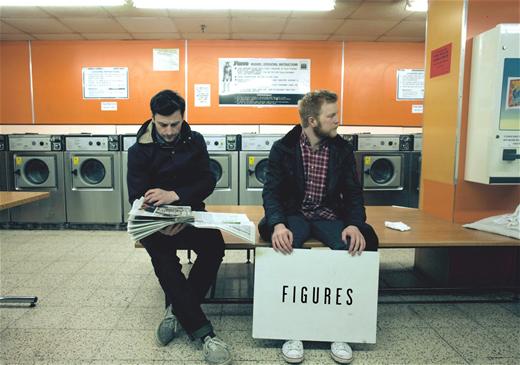
Soft Flex Mixtape by The-Drum


It's a shame that I haven't boosted The-Drum's tumblr until now. Outside the love for Brandon and Jeremiah's skills expressed by RA and Impose, a kindly chap referring to himself as "Fattie" has offered an appraisal that I really can't top. It makes more sense just to republish it here:


"Let’s pretend that your favorite 90s r&b jams decided to fuck the dark sex-crazed goth girl that you were in your late teens and y’all did some serious drugs.  The ensuing musical baby would be this badass mix by the drum.  Download it now.

Um…yes. YES."

Yes.

Soft Flex Mixtape by THE-DRUM

Falling by THE-DRUM

Icy Tropics by THE-DRUM

John Mack: Revealing Mexico at Robert Mann Gallery


John Mack. Torreón, Coahuila, Mexico, 2009. Silver print. 16 x 20 in. Copyright John Mack, courtesy Robert Mann Gallery. 
A picture of a group of middle-aged men in cowboy hats, seated in front of a mural (Torreón, Coahuila, Mexico, 2009) is hung directly across from the front gallery door in Revealing Mexico, an exhibition of photographs by John Mack now on view at Robert Mann Gallery. Aptly courting attention, it is the most legibly poetic photograph in the show, as one can instantly see how much the men in front of the mural have in common with the painted figures behind them. Together, their hats, clothing, and facial expressions all bring to mind hard, manual work, done in the sun, for multiple generations. Between those generations, time and space are camouflaged, so much, in fact, that it's not hard to imagine the 21st century men sinking back into the two-dimensional picture behind them.

John Mack. Merida, Yucatán, 2009. Silver print. 16 x 20 in. Copyright John Mack, courtesy Robert Mann Gallery.
John Mack. San Sebastián Abasolo, Oaxaca, 2004. Silver print. 16 x 20 in. Copyright John Mack, courtesy Robert Mann Gallery.
John Mack. Tampico, Tamaulipas, 2007. Silver print. 16 x 20 in. Copyright John Mack, courtesy Robert Mann Gallery. 
John Mack. Chavela Vargas, Tepoztlan, Morelos, 2008. Silver print. 16 x 20 in. Copyright John Mack, courtesy Robert Mann Gallery.
John Mack. Graciela Iturbide, Mexico City, 2009. Silver print. 16 x 20 in. Copyright John Mack, courtesy Robert Mann Gallery.
 John Mack. Juana Herrera, Punta Chueca, Sonora, 2009. Silver print. 16 x 20 in. Copyright John Mack, courtesy Robert Mann Gallery. 


While one can imagine viewers bringing to John Mack's photographs prejudices about rural life in contemporary Central America that are on the thin side, by no means do their emotive power depend on our eagerness to be push-overs. Many critics have insightfully compared recent paintings or photographs of peasants, farmers, or Central American migrant workers to works by the French Realist painters Courbet and Millet. 


Jean-François Millet. The Gleaners, 1857. Oil on canvas. 83.5 x 110 cm. © RMN (Musée d'Orsay) / Jean Schormans.


The comparison is no less appropriate here; like Courbet and Millet, Mack gives a treatment to rural life in contemporary Mexico based perhaps a little on moral sentimentalism but mostly on straightforward candor--and depth.


John Mack: Revealing Mexico is on view until July 1st at Robert Mann Gallery, 210 Eleventh Avenue, between 24th & 25th Streets, Floor 10, New York.

Friday, April 29, 2011

Art Fag City: The Sound of Art

A few months ago, Art Fag City founding editor Paddy Johnson made a compilation of recordings of music, noise, and sound art from galleries, museums, and other New York art venues:

This is a collaborative project in several senses of the word: more than forty artists contributed to it, one hundred seventy-four donors on Kickstarter funded it, and now, at its current stage of distribution, an equally diffuse group of enthusiasts of experimental sound is being counted on to give it a listen. 


So be cool. Make a purchase through PayPal and receive your very own edition of this vinyl LP in the mail. For those that don't have a turntable, it's worth mentioning that the album itself is mighty easy on the eyes. 


Michael Smith prints and T-shirts commemorating the project are also available.


Thursday, April 28, 2011

Hard at Work, Tikunning the Olam


You may be wondering how David Lynch is doing over in the realm of general coolness. Good news: His hair is passively modeling recognizable works of art, both seasons of Twin Peaks are on Netflix, and he recently posted a link to the David Lynch Signature Cup Coffee commercial on Twitter:


So…life is good.

Wednesday, April 27, 2011

Tuesday, April 26, 2011

Jene Highstein at Danese Gallery

Seeing this show in the flesh last Thursday made me want to revisit everything I read in college about Postminimalism. Along with Eva Hesse, Joel Shapiro, Hannah Wilke, and Martin Puryear, Highstein is part of a generation that was raised with a philosophy emphasizing literacy and sophistication in visual art. Shapes, colors, and forms were simple and direct. Painting and sculpture were so abstract as to align themselves with Platonic ideals: immaculate, pretty much authorless, and, above all, pure. I'm already kind of plagiarizing myself and don't want to drag what I wrote about Mary Judge into the ground, but to me, to go against the grain in this respect, making work that--for all its subtlety--is decidedly impure, is to commit an act of particular courage.

Jene Highsteen, NEW SCULPTURE: Towers and Elliptical Forms, Installation view, 2011.
 The titles of the human-height sculptures in the show (above, from left to right, Jar Tower, Off-Balance Balloon, and Jug Tower, all 2008) along with the falteringly anthropomorphic and asymmetrical tower sculptures, (below) recall things that are at once practical and monumental, at once earthly and beyond what can be easily grasped. These works are emphatically graceful, nebulous, and imperfect; in short, more like the thoughts of a person than authorless ideals.

Jene Highsteen, NEW SCULPTURE: Towers and Elliptical Forms, Installation view, 2011.
Highstein is also like Wilke and Puryear in the considerable originality with which he treats materials. As with Wilke's work in plastics or Puryear's in wood, Highstein's approach (in the past to clay, glass, and in this show, to steel) is a matter of gentle exploration, more about meditating on the possibilities of his medium than garrulously flirting with its edgy limitations. Made of a traditionally heavy material, Highstein's sculptures in this show maintain a firm connection to the ground. And yet they appear, occasionally, to float.